Colors bring life to everything, from decorations and kitchenware to clothing. They also make food, candies, and cakes look amazing. However, to achieve those vibrant and attractive colors, many bakers, confectioners, and bakeries rely on controversial artificial food colorings.
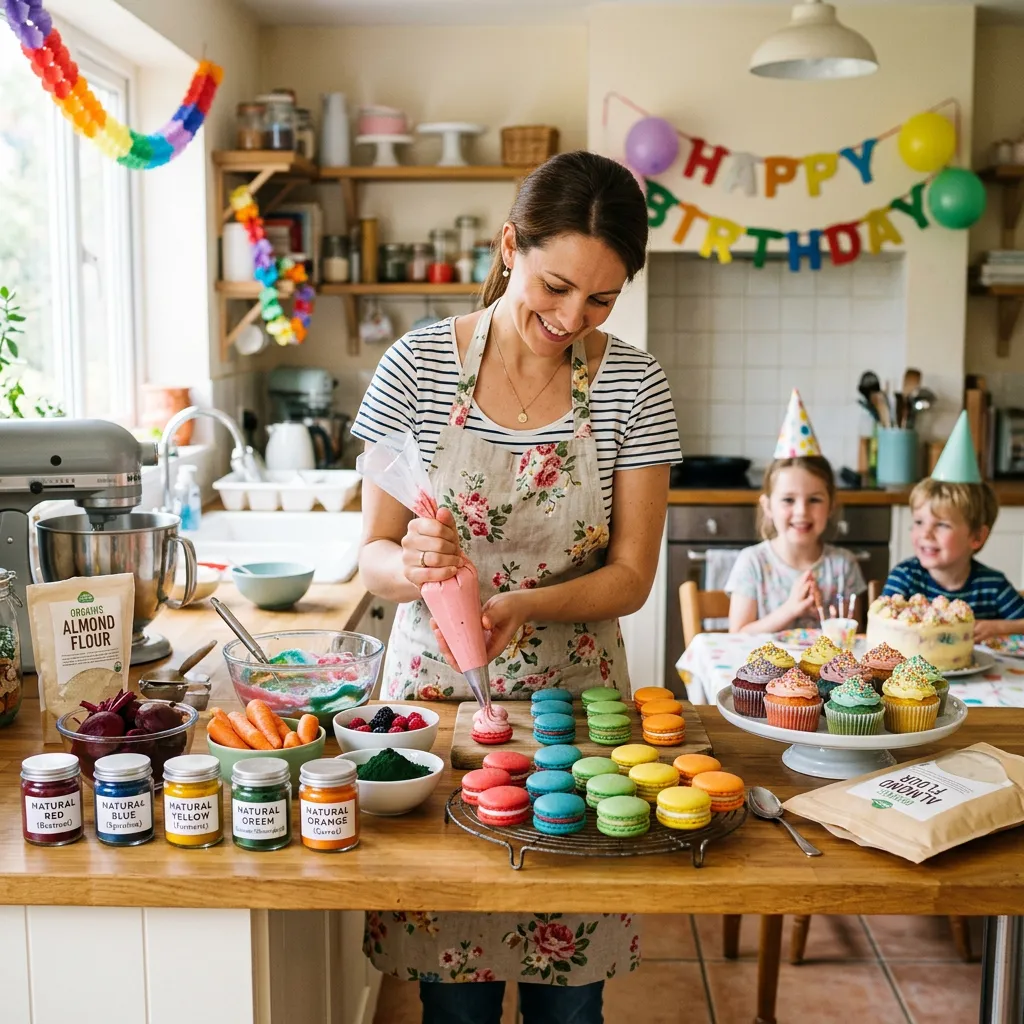
My children cannot consume artificial food colorings. Because of this, in addition to carefully reading the labels of every processed product I buy, I often get creative to make their birthday parties colorful and fun. Over time, I discovered ways to make colorful sweets and macarons using natural food colorings, which can be used in both sweet and savory recipes since the small amounts required do not significantly affect the flavor.
But what is the controversy surrounding artificial food colorings?
Several studies suggest that at least six artificial colorings — sunset yellow FCF (E110), quinoline yellow (E104), carmoisine (E122), allura red (E129), tartrazine (E102), and ponceau 4R (E124) — may be associated with:
- Cancer development
- Hormonal changes
- Attention disorders
- Hyperactivity in children
For this reason, some countries in the European Union require warning labels on products containing these additives and encourage manufacturers to seek alternative coloring options.
In my children's case, there is an additional reason to avoid artificial colorings: G6PD deficiency.
Even so, artificial food colorings remain widely available in party supply stores and supermarkets. If you prefer a more natural alternative, check out these tips from São Paulo-based chef Raiza Costa, host of the culinary show Rainha da Cocada on GNT.
My children cannot consume artificial food colorings. Because of this, in addition to carefully reading the labels of every processed product I buy, I often get creative to make their birthday parties colorful and fun. Over time, I discovered ways to make colorful sweets and macarons using natural food colorings, which can be used in both sweet and savory recipes since the small amounts required do not significantly affect the flavor.
But what is the controversy surrounding artificial food colorings?
Several studies suggest that at least six artificial colorings — sunset yellow FCF (E110), quinoline yellow (E104), carmoisine (E122), allura red (E129), tartrazine (E102), and ponceau 4R (E124) — may be associated with:
- Cancer development
- Hormonal changes
- Attention disorders
- Hyperactivity in children
For this reason, some countries in the European Union require warning labels on products containing these additives and encourage manufacturers to seek alternative coloring options.
In my children's case, there is an additional reason to avoid artificial colorings: G6PD deficiency.
Even so, artificial food colorings remain widely available in party supply stores and supermarkets. If you prefer a more natural alternative, check out these tips from São Paulo-based chef Raiza Costa, host of the culinary show Rainha da Cocada on GNT.
Natural Food Colorings
Red Food Coloring
Ingredients
- 1 beetroot
How to Make It
Blend the beetroot in a juicer or blender with a small amount of water until it becomes a puree. Strain the mixture. For a deeper red color, simmer over low heat until reduced to the desired intensity.
Pink Food Coloring
Ingredients
- 200 g raspberries
How to Make It
Blend the raspberries and strain.
Purple Food Coloring
Ingredients
- 200 g blackberries
How to Make It
Blend the blackberries and strain.
Yellow Food Coloring
Ingredients
- 1 mango
- 5 g turmeric
How to Make It
Blend the mango pieces and add turmeric if you want a brighter yellow color.
Blue Food Coloring
Ingredients
- 1 red cabbage
- 1 pinch baking soda
How to Make It
Chop the cabbage and boil it for about 10 minutes. Remove the cabbage leaves and add the baking soda to create a vibrant blue color.
Green Food Coloring
Ingredients
- 200 g spinach or any leafy green vegetable
How to Make It
Blend with a small amount of water. Strain and simmer over low heat to reduce and intensify the green color.
Orange Food Coloring
Ingredients
- 4 carrots
How to Make It
Blend the carrots with a small amount of water. Strain and simmer over low heat until reduced and the orange color becomes more concentrated.
Carrot-Shaped Brigadeiros
The author highlights beautiful carrot-shaped brigadeiros made by Gell Macedo for her oldest son's first birthday party, which had a farm-themed celebration.
"Look how beautiful these carrot-shaped brigadeiros are! And they were absolutely delicious!"
More Tips
Don't want to prepare every color individually? You can make only the primary colors and mix them to create additional shades:
- Red + Yellow = Orange
- Blue + Yellow = Green
- Red + Blue = Purple
About the Author
Lia Fernandes
Journalist and writer covering aging well, health, and travel after 40. Read more